

Search: Lineout Pods Moving
 6:01
6:01
Lineout Pods and Movement
The coach progresses the line out onto small units working together, adds in some competition and starts work with some five man options
 3:48
3:48
Scotland New Lineout Move
Scotlands clever score from the line out v Ireland was a great example of coaches or players being innovative and looking at new ways to do things. This clip shows a few slightly different uses for placing your scrum half at the front of the line out. It is just ideas and about pushing the boundaries of the laws
 0:17
0:17
Did this Lineout win the World Cup
The black team split the lineout pods at the front and the back, the defence are then forced to move with these pods to compete or stop a driving maul, (As they are close to the try line), this creates a whole in the middle of the lineout which the black team exploit cleverely. This play is clever and tactical and shows how complex the lineout can be. Key factors : Lifting pods to move quickly - Strong jump - Accurate lifting - Accurate throw - Delayed run through the middle
To watch over 2500+ videos join now for free!
JOIN NOW 0:28
0:28
Strike move from Lineout
RGS Guildford secure lineout ball and perform a 'circle' ball, with the fly-half looping around the centre who pops the ball back to him. This is to draw in defenders, to create space out wide. The winger is able to exploit this space to complete the try.
 0:47
0:47
Lineout - 4 pod passing challenge
Four lifting pods must hold their jumpers aloft long enough for them to pass a ball through the hands twice. Lifters should stand close together and try to lock-out their arms. Jumpers should maintain a strong core and keep their legs straight to make life easier for the lifters.
Lineout Game - Pod Race
This game is also in the level 2 swatch (coaching the 15-a-side game).
When working with players actively lifting and jumping, it is most important to be sensitive to fatigue, primarily for safety reasons
 0:34
0:34
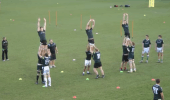
Attack from short lineout
With the dummy lifting pod moving back, Filton College execute a short lineout to the front lifter. They attack wide before 're-winding' and using the overlap on the nearside to break through for a try.
 0:57
0:57
Lineout Movement and Lifting
Using a coloured grid, pods of 3 can work on their timing and technique when moving before the lift. The coach calls which colour cone to jump from, so the players can learn to react quickly. Rotate jumpers so that players practice working in different pods.
 2:20
2:20
Lineout - Learning To Lift
Learning to lift and work as a pod of three is the foundation of an effective line out. London Irish academy provides some great tips on how to coach this area
 2:15
2:15
Lineout - Speed & Movement Drill
Working in pods of three on speed & movement will help you win line outs. Players also develop better skills in order to play a better standard of rugby and help others around them. Another London Irish coaching resource
Lineout Game - Target Games
This practice is a safe and enjoyable activity to develop the movement of the lifting pod and the accuracy of the throw
 6:08
6:08
Lineout Lifting Progressions
The second session focusses on developing the basic techniques for building your line out. Wasps second row James Cannon takes some level 6 players through some progressions
 0:38
0:38
Sevens - Full Lineout 3
Accurate skills are the key to lineouts in seven's, a combination of movement, lifting and throw combine to make an effective restart for the attacking team. The shape of the attacking side is pre planned to create a mis - match with a faster player v a slower one. key factors : Pre call the move - Fast feet - Strong core for jumper - Support from both players to lift the jumper - Jumper to jump - Accurate throw - Support he jumper to the ground - Offload pass to scrum half
 0:47
0:47
Lions 09 - Lineout Movement
A dynamic practise for speed and quality of lifting in lineouts. This exercise can be used for 15's and 7's and for different age groups. The coaches can vary the distance of the cones and progress to both lifters moving. Coaches can add some fun by making it a competition. Key factors : The jumper must jump - Core body strength - Keep body stiff and straight - Lifters work together - Lock out arms - Bring the jumper down safely
Building the Lineout
This video initially shows the lift, bring down to the ground and bind of a lineout pod.
The video also illustrates safe and effective ways to introduce movement, lifting and jumping skills to youth players
 4:41
4:41
Learning to Lift for the Lineout - Get started
Some slightly different progressions in building upon the basic skills for an effective line out
 2:15
2:15
Building the Lineout
We have changed the content on this clip - just in the short term - until we produce new content on building the maul from a Lineout - apologies
 1:28
1:28
Driven Lineout Strategy
The lineout & box kick has become increasingly more important this season, Brian Smith from London Irish explains what "Exits" are and why they are important
The Lineout Game - Defence
Defending against the lineout throw is a key area for disrupting the opposition and their attacking platform. The defending jumper can be very effective by getting a hand in between the opponents’ hands and disrupting the catch. This may also block the vision of the opponent who wishes to follow the flight of the ball
Dylan Hartley on the Lineout
 0:31
0:31
Sevens - Full Lineout 2
Sevens - Full Lineout 2
The Lineout Game - The floor game
The lineout competition is not won and lost when the ball is caught. If the team defending the throw cannot compete in the air, they can subsequently compete on the ground and disrupt the quality of possession the opposition wish to use
 1:30
1:30
The Lineout Game - Lifting techniques
The Lineout Game - Lifting techniques
 3:50
3:50
Sale - Lineout lifting & set
Coaching junior players to lift effectively in the line out is based upon some simple steps. Ross Harrison from Sale sharks outlines the key principles and progresses to the driving maul
Step 6 - Introducing the Lineout
 6:20
6:20
Lineout Lifting Fundamentals - Get started
An effective line out is based upon the fundamentals of movement, jumping and lifting. James Cannon from London Wasps takes some amateur players through the basic skills and techniques
QBE - Lineout Throwing Game
The Lineout Game - Under13
The under 13 age group uses the full size pitch. The coach should consider that the 5m tram line as a bigger obstacle for a 12 year old thrower, than it is for a 15 year old thrower
To develop lineout understanding, it may be worth exploring for the best thrower and not select their roles at the lineout by shirt numbers
If the policy is to throw to the front at every lineout, how will this develop the tactical and technical understanding of the lineout game?
It may be that possession is occasionally lost, but is the long term development of players more important than any given children’s’ game?
 1:50
1:50
Lineout Lifting Basics
The lineout is a key part of rugby union and it is vital for player safety and success that the proper technique is learnt. James Cannon of London Wasps walks through the key technical elements of lineout lifting and jumping. Log in to see the full session.
 1:18
1:18
Lineout Fundamentals
Dominant lineout players such as Geoff Parling build their trade on solid technical foundations. Log in to RCD for plenty of coaching tips on lineout technique.
 1:15
1:15
Geoff Parling - Lineout Dominance
Dominant lineout players such as Geoff Parling build their trade on solid technical foundations. Log in to RCD for plenty of coaching tips on lineout technique.
 1:02
1:02
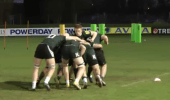
Lineout Catch & Drive
Premiership Rugby coaches and players highlight the importance of the lineout as an entry point and an attacking platform. Join PremiershipRugbyCoaching.com for ideas and examples to improve your lineouts.
 0:45
0:45
Building the Maul from a Lineout
A maul from a lineout can be a powerful attacking tool. This clip shows how to construct the maul at the front of the lineout quickly. Practice is key to ensure players understand their positioning and timing.
 1:40
1:40
Lineout Catch-and-drive
Lineout catch and drive drill
 1:55
1:55
Lineout essentials
The lineout provides an essential attacking platform. Log in to see advice and examples from pro players, suitable for elite, adult and youth players.
 0:26
0:26
Lions 09 lineout 5
Lineout variation and development
 0:11
0:11
Lions 09 strike moves 4
Developing attack moves through the backs
 0:25
0:25
Men's - Turnover and move the ball 4
Men's - Turnover and move the ball 4
 0:49
0:49
Mike Catt - Attacking from Lineouts - Dummy Options
Classroom session with Mike Catt - discussing the key points of attacking from a lineout
 1:03
1:03
Mike Catt - Attacking from Lineouts - Quick Ball
Classroom session with Mike Catt - discussing the key points of attacking from a lineout
 1:00
1:00
Mike Catt - Attacking from Lineouts - Back Ball
Classroom session with Mike Catt - discussing the key points of attacking from a lineout
 0:04
0:04
Men's - Lineout maul good defence 1
Men's - Lineout maul good defence 1
 0:29
0:29
Lions 09 lineout 2
Lineout variation and practice
 0:23
0:23
Lions 09 lineout 3
Lineout variation and practice
 0:17
0:17
Lions 09 Lineout 1
The Lions practice their lineouts
 0:23
0:23
Lions 09 Lineout 4
Lineout variation and practice
 0:39
0:39
Women's - Turnovers and move the ball 1
Women's - Turnovers and move the ball
 0:21
0:21
Women's - Strike Moves 1
Women's - Strike Moves 1

Men's - Ball off the top from lineout 2
An example of playing the ball from the top of a lineout

Men's - Lineout catch & maul drive 1
Men's - Lineout catch & maul drive 1
 0:25
0:25
Men's - Lineout catch & maul drive 2
An example of setting up a maul after a catch and drive at a lineout
 0:24
0:24
Sevens - Lineout catch & maul drive
Sevens - Lineout catch & maul drive
 0:36
0:36
Sevens - Full Lineout 1
Sevens - Full Lineout 1
 0:17
0:17
Junior - Ball off the top from lineout 2
Junior - Ball off the top from lineout 2
 0:20
0:20
Women's - Lineout catch & maul / drive
Women's - Lineout catch & maul / drive
 0:27
0:27
Men's - Strike Moves 3
Men's - Strike Moves 3
 0:23
0:23
Men's - Lineout maul good defence 3
Men's - Lineout maul good defence 3
 1:11
1:11
Team patterns from lineout
Some ideas on developing paly from the lineout and progressions
 0:32
0:32
Junior - Lineout catch & mail / drive
Junior - Lineout catch & mail / drive
 0:25
0:25
Women's - Lineout mail good defence
Women's - Lineout mail good defence
 0:21
0:21
Junior - Strike Moves 1
Junior - Strike Moves 1

Men's - Short Lineout 2
An example of a shortened lineout
 2:11
2:11
Lineout Jumping Fundamentals
Here we take you through the basic and essential core skills required for any jumper in the lineout.
The Lineout Game - Movement in the line out
It may be that a light, athletic group of players focus on speed over technique, but a bigger group of players may focus on technique in order to maximise height.The tempo and tactics at the lineout needs to suit the player profiles.
 0:59
0:59
Shadowing and movement in the lineout
Lineout practice for developing the movement and lift timing.
 0:24
0:24
Lineout game for speed of lifting
Elite coach Neal Hatley uses a game to develop speed of lifting in a lineout by providing an element of competition and fun.
 2:52
2:52
Lineout Lifting Hand Placement
This video takes you through the importance of hand placement in building a solid lineout.
 0:19
0:19
Men's - Lineout maul good defence 2
Men's - Lineout maul good defence 2
 0:29
0:29
Strike Move - Slice
A good 'go to' strike move for all players 1-15 to know. Passing the ball behind a decoy runner can commit and confuse defenders, hopefully creating holes to attack.
 0:43
0:43
Backs Move - Decoy & DSM
This backs move combines a decoy 'slice' pass with the DSM (dummy-switch, miss pass) to confuse the defence. The first decoy runner and dummy-switch should commit the inside players, keeping the defensive line narrow. The space out wide is then exploited with the miss pass.
 2:13
2:13
Lineout Tips from London Irish Forwards
London Irish forwards talk through some of the elements that make an effective lineout, and how you can prepare for a match.
 0:34
0:34
Team patterns play from lineout
Developing play from the lineout should have options and progressions
 1:09
1:09
Lineout Throwing with Dylan Hartley
Northampton Saints and England hooker Dylan Hartley talks through his lineout throwing procedures and explains the importance of routine
 0:21
0:21
Men's - Turnover and move the ball 1
Men's - Turnover and move the ball

Men's - Full lineout 2
A 5 man lineout where all the players are spread evenly apart, all players can lift and jump so the focus is on speed and accuracy. Key factors : Even spread of players - Communication - Quick jump - Accuate lifting - Accurate throw in
 5:59
5:59
Lineout Throw with Dylan Hartley
Dylan Hartley explains his own approach and routines for throwing into the line out and provides some tips and advice to young players
Chapter 6 - Introducing the Lineout
 0:24
0:24
Sevens - Strike Moves 1
A simple but effective attack from a scrum. Three good passes provides the winger to run past his defender to score. Notice how the first reciever is directly behind the scrum and not to the side, (This makes the pass from the scrum easier when under pressure). Key factors : Position of 1st reciever - Run straigh and wide spin pass - Speed of the runner
 2:48
2:48
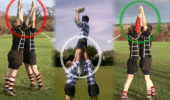
The Lineout Game - Lifting
When introducing lifting, consider the suitability of the players for each role.
It may be that a small, light player now takes up a key role in jumping and catching while the bigger players, who may have previously jumped are best suited to lifting at this stage in development
When introducing lifting to young players, always side on caution and use spotters to assist in the initial learning stages. This will develop confidence and competence
Always be aware of fatigue and do not over work the players even if progress is slow
 0:34
0:34
Sevens - Turnovers and move the ball 4
From a turnover in contact the attackers pass the ball wide one way and then a deep wide pass back in the other direction to pull the defence out of shape and create an opportunity to attack. Key factors : Wide flat pass - Players support from depth - Deep wide pass - Running and swerving past the defender
 0:18
0:18
Men's - Turnover and move the ball 2
Strong defence and a turnover allows two quick passes, (One long pass), and then attack the defence. The two passes have changed the channel of attack by 30 metres.
Key factors : Tackle and stay on your feet - Long quick pass / spin pass - Communicate loudly - Support the ball carrier on his shoulder

Women's - Turnovers and move the ball 3

Women's - Turnovers and move the ball 2

Women's - Strike Moves 2

Women's - Ball off the top from lineout 2

Women's - Ball off the top from lineout 1

Men's - Short lineout 1
 0:15
0:15
Team continuity - using pods
Developing continuity skills in a team enviroment
 0:25
0:25
Men's - Strike Moves 1

Women's - Short lineout

Women's - Full lineout

Men's - Strike Moves 2

Men's - Turnover and move the ball 3
 0:24
0:24
Men's - Strike Moves 4
A great axample of how to use effective passing and dummy runners to attack from scrums. Key factors ; Solid scrum - Accurate spin pass - Load calling from dummy runners - Different angles of running - Wide flat pass - Speed and swerve from the final player
 2:02
2:02
Joe Launchbury - Lineout Tips
England & Wasps Second row Joe Launchbury provides a few tips on the role of the lock and what coaches and players should focus on
 2:15
2:15
Lineout Lifting Fundamentals
Zoran Higgins takes you through the basic lifting fundamentals that all Junior players will have to learn. This focusses specifically on hand placement and body positioning.
 0:40
0:40
Team patterns - more lineout options
Patterns from set piece should be practised regularly
 0:58
0:58
Dylan Hartley - Lineout Throwing
Dylan Hartley explains the importance of routine and structure when preparing for each throw, in order to achieve consistency.
 4:16
4:16
Lineout Attack
Here are some good examples of how to use the line out effectively in attack to help you in your coaching process