

Search: Mens Short Lineout 1

Men's - Short lineout 1
 0:04
0:04
Men's - Lineout maul good defence 1
Men's - Lineout maul good defence 1
Men's - Lineout catch & maul drive 1
Men's - Lineout catch & maul drive 1
To watch over 2500+ videos join now for free!
JOIN NOW
Men's - Short Lineout 2
An example of a shortened lineout
Men's - Ball off the top from lineout 1
Junior - Short Lineout 1
 0:36
0:36
Sevens - Full Lineout 1
Sevens - Full Lineout 1
 0:22
0:22
Men's - Good body position in contact & ball presentation 1
Men's - Good body position in contact & ball presentation 1
 0:19
0:19
Men's - Lineout maul good defence 2
Men's - Lineout maul good defence 2
 0:27
0:27
Men's - Exiting the 22m 1
Men's - Exiting the 22m 1
 0:23
0:23
Men's - Lineout maul good defence 3
Men's - Lineout maul good defence 3
 0:30
0:30
Men's - Patterns of play 1
Three phases of play with accurate passing and quick ball from each breakdown creates the opportunity for the scrum half to run through and score
Key factors : Present a target with your hands - Pass the ball laterally - Run straight / inside shoulder of the defender
 0:18
0:18
Men's - Short restart
Men's - Short restart
 0:34
0:34
Attack from short lineout
With the dummy lifting pod moving back, Filton College execute a short lineout to the front lifter. They attack wide before 're-winding' and using the overlap on the nearside to break through for a try.

Men's - Full lineout 2
A 5 man lineout where all the players are spread evenly apart, all players can lift and jump so the focus is on speed and accuracy. Key factors : Even spread of players - Communication - Quick jump - Accuate lifting - Accurate throw in
Men's - Ball off the top from lineout 2
An example of playing the ball from the top of a lineout
 0:25
0:25
Men's - Lineout catch & maul drive 2
An example of setting up a maul after a catch and drive at a lineout
 0:17
0:17
Lions 09 Lineout 1
The Lions practice their lineouts
 0:17
0:17
Men's - 2 v 1
A good example of phase play to create a 2 v 1 attacking platform. The initial deep pass then creates an overlap and the defender drifts to allow the attacker to run through easily.
Key factors : Quick ball at breakdown - Straight lines of running - Deep pass - straight lines of running again - Loud communication
 0:21
0:21
Men's - Turnover and move the ball 1
Men's - Turnover and move the ball
Men's - Offloads for Continuity 1

Men's - Classic Tackle 1
Men's - Wrap Tackle 1

Men's - Clips of Coaches 1

Men's - High Tackle 1

Men's - Incorrect Tackle 1

Men's - Leg Drive 1

Junior - Ball off the top from lineout 1
Junior - Short Lineout 2
Junior - Full Lineout 1
Men's - Collapsed Scrums 1
Women's - Short lineout
Women's - Ball off the top from lineout 1
Men's - Wheeled Scrums 1
Men's - Ref awarding penalty at scrum 1

Men's - Injured players and medics 1
 0:25
0:25
Men's - Strike Moves 1
 0:19
0:19
Men's - Standard restart with good catch 1
 0:36
0:36
Sevens - Short Restart 1
Men's - Offloads 1
 0:19
0:19
Men's - 3 v 2 1
A passage of play that shows how to attack with more attackers than defenders, a 3 v 2. The winger shows that strong running and determination can break tackles. Click on the practises in this section for coaching ideas
 0:19
0:19
Men's - Straight Scrums 1
An example of a straight scrum.
Men's - Accurate clearing of players 1
 2:54
2:54
Quins - Tackle Technique 1 v 1
A new tackle technique exercise without the "Bone on Bone" collisions
 2:15
2:15
Building the Lineout
We have changed the content on this clip - just in the short term - until we produce new content on building the maul from a Lineout - apologies
 0:40
0:40
IRB Men's - Offloads 3
A quick lineout allows players to attack a "broken field" defence. Running at space moves the defenders and the suport player comes from depth behind the attacker to score. Key factors : Loud communication - Accurate spin pass - Attacking space - Trail support - Pop pass - Quick running
Sevens - Patterns of Play 1
A variety of passing and phases which are used to stretch the defence in order to create a whole for the attacker to exploit. Key factors : Wide spin pass - Short pop pass - Overhead pass - Lots of calling and commuication - Players retreat backwards to be in support
 0:15
0:15
Men's - Offloads 2
A counter attack invlving moving the ball wide quickly, then attack defenders with support runners and finally a 2 v 1 to score in the corner. Key factors : Strong communication - Wide spin passes - Attacking the space around defenders - Support the ball carrier from behind - Offload with two hands - straight running - Flat pass
 2:52
2:52
Lineout Lifting Hand Placement
This video takes you through the importance of hand placement in building a solid lineout.
 0:25
0:25
Junior - 2 v 1 1
Junior - 2 v 1 1
 0:58
0:58
Sevens - Offloads 1
Sevens - Offloads 1
 0:21
0:21
Men's - Standard restart with good catch 2
Men's - Standard restart with good catch 2
 0:17
0:17
Women's - Offloads 1
Women's - Offloads 1
 6:20
6:20
Lineout Lifting Fundamentals - Get started
An effective line out is based upon the fundamentals of movement, jumping and lifting. James Cannon from London Wasps takes some amateur players through the basic skills and techniques
Scrum - 1 vs 1
Practice body position and warm up for full scrum session.
 0:14
0:14
Evasion 1 v 1 after pass
Core skills handling
Step 3 - Introducing the 1 v 1 Scrum
 0:14
0:14
Evasion 1 v 1
A decision making exercise to beat defenders and attack shoulders
 0:38
0:38
1 v 1 Evasion Skills
A lone attacker must beat a single defender. This is great way to develop evasion skills in the attacker, and positioning for the defender.
 0:07
0:07
1 v 1 defence
Winger positional skills.
 2:24
2:24
1 v 1 Tackling in Channel
An opportunity for players to put what they have learnt on tackle technique into practice. Each tackle is observed by all other players who can give feedback. Ensure all players have a go at attacking and defending.
 5:59
5:59
Lineout Throw with Dylan Hartley
Dylan Hartley explains his own approach and routines for throwing into the line out and provides some tips and advice to young players

1 v 1 attack
Winger positional skills training.
 1:32
1:32
Quins Defence - 1 v 1 tackle skills
Close contact in a small channel ensures the players work their movement skills in both attack and defence. The coach reinforces the skills for contact prior to progressing this exercise
1. Support - 1,2,3 Follow Through
Isolated technical practice
Courtesy of the SRU
 4:41
4:41
Learning to Lift for the Lineout - Get started
Some slightly different progressions in building upon the basic skills for an effective line out
 0:18
0:18
Women's - Straight Scrums 1
A well contested scrum from both teams. Good technique and body position ensure a solid and safe scrum. The red team use this restart to kick and gain territory. Key factors : Strong body position - Tight binding between the players - Calling - Players push in a straight line - Ball control from ther no 8
The Lineout Game - Under13
The under 13 age group uses the full size pitch. The coach should consider that the 5m tram line as a bigger obstacle for a 12 year old thrower, than it is for a 15 year old thrower
To develop lineout understanding, it may be worth exploring for the best thrower and not select their roles at the lineout by shirt numbers
If the policy is to throw to the front at every lineout, how will this develop the tactical and technical understanding of the lineout game?
It may be that possession is occasionally lost, but is the long term development of players more important than any given children’s’ game?
 0:17
0:17
Did this Lineout win the World Cup
The black team split the lineout pods at the front and the back, the defence are then forced to move with these pods to compete or stop a driving maul, (As they are close to the try line), this creates a whole in the middle of the lineout which the black team exploit cleverely. This play is clever and tactical and shows how complex the lineout can be. Key factors : Lifting pods to move quickly - Strong jump - Accurate lifting - Accurate throw - Delayed run through the middle
 1:50
1:50
Lineout Lifting Basics
The lineout is a key part of rugby union and it is vital for player safety and success that the proper technique is learnt. James Cannon of London Wasps walks through the key technical elements of lineout lifting and jumping. Log in to see the full session.
 1:02
1:02
Lineout Catch & Drive
Premiership Rugby coaches and players highlight the importance of the lineout as an entry point and an attacking platform. Join PremiershipRugbyCoaching.com for ideas and examples to improve your lineouts.
 0:45
0:45
Building the Maul from a Lineout
A maul from a lineout can be a powerful attacking tool. This clip shows how to construct the maul at the front of the lineout quickly. Practice is key to ensure players understand their positioning and timing.
 1:15
1:15
Geoff Parling - Lineout Dominance
Dominant lineout players such as Geoff Parling build their trade on solid technical foundations. Log in to RCD for plenty of coaching tips on lineout technique.
 1:18
1:18
Lineout Fundamentals
Dominant lineout players such as Geoff Parling build their trade on solid technical foundations. Log in to RCD for plenty of coaching tips on lineout technique.
 1:40
1:40
Lineout Catch-and-drive
Lineout catch and drive drill
The Lineout Game - Defence
Defending against the lineout throw is a key area for disrupting the opposition and their attacking platform. The defending jumper can be very effective by getting a hand in between the opponents’ hands and disrupting the catch. This may also block the vision of the opponent who wishes to follow the flight of the ball
Sevens - 2 v 1
A variety of passes create a 2 v 1 which is executed perfectly for the outside attacker to score. Key factors : Different angles of running and support - Comunication - Ball presentation - Effective clearing of defenders at the breakdown - Accurate wide passes - Attack the inside shoulder of the last defender - Flat spin pass
 0:28
0:28
3 v 1 in Channel
A progression from the 2 v 1, where a second pass is encouraged to move the ball away from the defender.
 0:31
0:31
Sevens - Full Lineout 2
Sevens - Full Lineout 2
 0:49
0:49
Mike Catt - Attacking from Lineouts - Dummy Options
Classroom session with Mike Catt - discussing the key points of attacking from a lineout
 0:23
0:23
Junior - 2 v 1 2
Junior - 2 v 1 2
 1:55
1:55
Lineout essentials
The lineout provides an essential attacking platform. Log in to see advice and examples from pro players, suitable for elite, adult and youth players.
 2:13
2:13
Lineout Tips from London Irish Forwards
London Irish forwards talk through some of the elements that make an effective lineout, and how you can prepare for a match.
 1:28
1:28
Driven Lineout Strategy
The lineout & box kick has become increasingly more important this season, Brian Smith from London Irish explains what "Exits" are and why they are important
Second Row - Short Arm Bind
The lock, or second row, needs to stay on the prop, so if the bind between the two locks is too tight and the scrum splits, the lock may lose their position on the prop.
This clip shows a short arm bind that allows a certain amount of independence for adjustment
Level 2 - Back Row Example Clip 1
Level 2 - Back Row Example Clip 1
 0:15
0:15
Men's - Offloads for Continuity 2
Men's - Offloads for Continuity 2
 0:27
0:27
Men's - Strike Moves 3
Men's - Strike Moves 3
 0:34
0:34
Team patterns play from lineout
Developing play from the lineout should have options and progressions
 0:21
0:21
Women's - Strike Moves 1
Women's - Strike Moves 1
 0:15
0:15
Women's - 2 v 3 1
Women's - 2 v 3 1
 1:09
1:09
Lineout Throwing with Dylan Hartley
Northampton Saints and England hooker Dylan Hartley talks through his lineout throwing procedures and explains the importance of routine
 2:11
2:11
Lineout Jumping Fundamentals
Here we take you through the basic and essential core skills required for any jumper in the lineout.
 0:23
0:23
Lions 09 Lineout 4
Lineout variation and practice

Women's - Short restarts
Women's - Short restarts
 0:59
0:59
Shadowing and movement in the lineout
Lineout practice for developing the movement and lift timing.

Women's - 2 v 1
Women's - 2 v 1
 0:25
0:25
Women's - Lineout mail good defence
Women's - Lineout mail good defence
 0:24
0:24
Lineout game for speed of lifting
Elite coach Neal Hatley uses a game to develop speed of lifting in a lineout by providing an element of competition and fun.
Sevens - 2 v 1
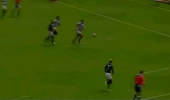
Seven's is about creating chances and then taking them. In this clip the Blue team take the ball up the middle of the pitch to draw in defenders, after recycling the ball they have a 2 v 1 opportunity, a straight line of running and a flat wide pass creates the try. Key factors : Call early - Run straight - Wide spin pass - Catch and swerve to score